
Invest in shipping,
all in one platform
From onboarding to exit, Helm delivers the infrastructure for every stage of the investment life cycle.
Life cycle of an Investment
A clear view of what investing through Helm looks like. From onboarding to exit.
Onboarding
Create your profile, complete KYC process and fill out the investor questionnaire to access a curated selection of exclusive opportunities. Our team will verify your information, ensuring a secure and transparent ecosystem.
Selection
Explore a diverse range of maritime investment opportunities. Review in-depth reports, essential project information and technical specifications for each alternative. Select what best fits your investment goals and risk appetite.
Commitment
Access the investment documentation and subscribe through our secure interface. Digitally sign to confirm your commitment. The entire process is completed seamlessly, end-to-end, online.
Monitoring
Stay on top of your investment with our intuitive dashboard. Follow vessel operations, track commercial performance and get regular financial updates directly. Everything you need, visible in one place.
Exit
Navigate your investment with confidence all the way to exit. Track portfolio value throughout, verify proceeds from liquidity events, and tap into our industry-savvy investor community for smoother secondary transactions.
Paths to participate in Maritime Assets
Helm provides multiple pathways for shipping investments, allowing you to select a strategy suited to your financial goals and risk appetite.
Single Vessel Allocation
You invest in a single, specified vessel, gaining direct exposure to its operations and financial performance.
- Vessel type
- Project sponsor
- Strategy
- Capital structure
- Investment horizon
Best for investors who want clarity and concentration.
Maritime Fund
Invest through a diversified portfolio of shipping assets across vessels, routes and market cycles.
- Vessel type
- Cargo
- Trade route
- Charter profile
- Investment horizon
Best for investors seeking portfolio diversification.
Shipping moves the world, but investing in it has remained the domain of a few. Helm changes that by bringing access, structure, transparency and more efficient ways to participate.”
Dennis Psachos
Co-founder
Your Workspace
Access market intelligence, monitor your portfolio and stay informed from a single platform.
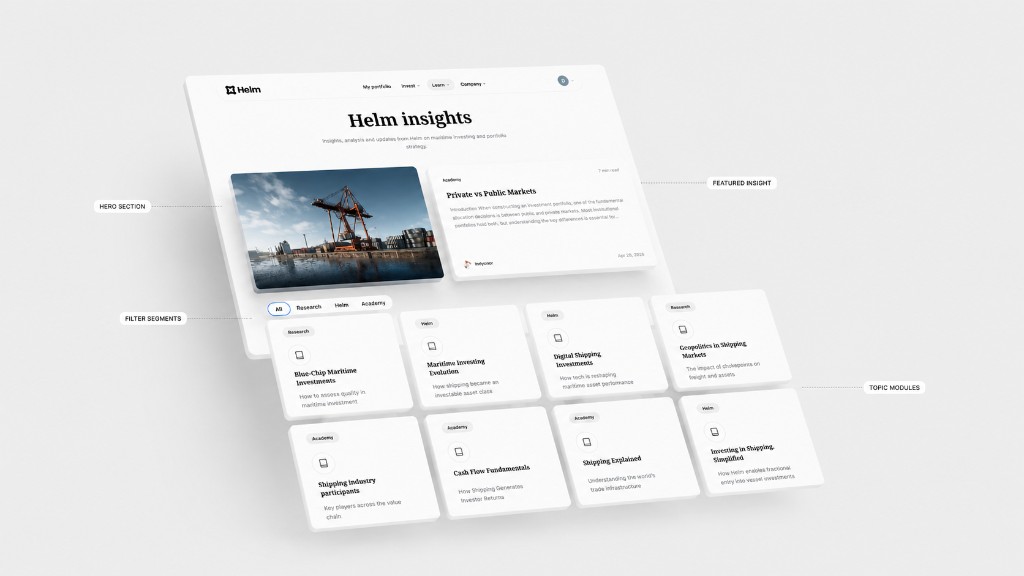
Market Intelligence
Research and insights on maritime markets, supported by data and proprietary content.
- Market insights
- Asset explainers
- Strategy breakdowns
- Educational content
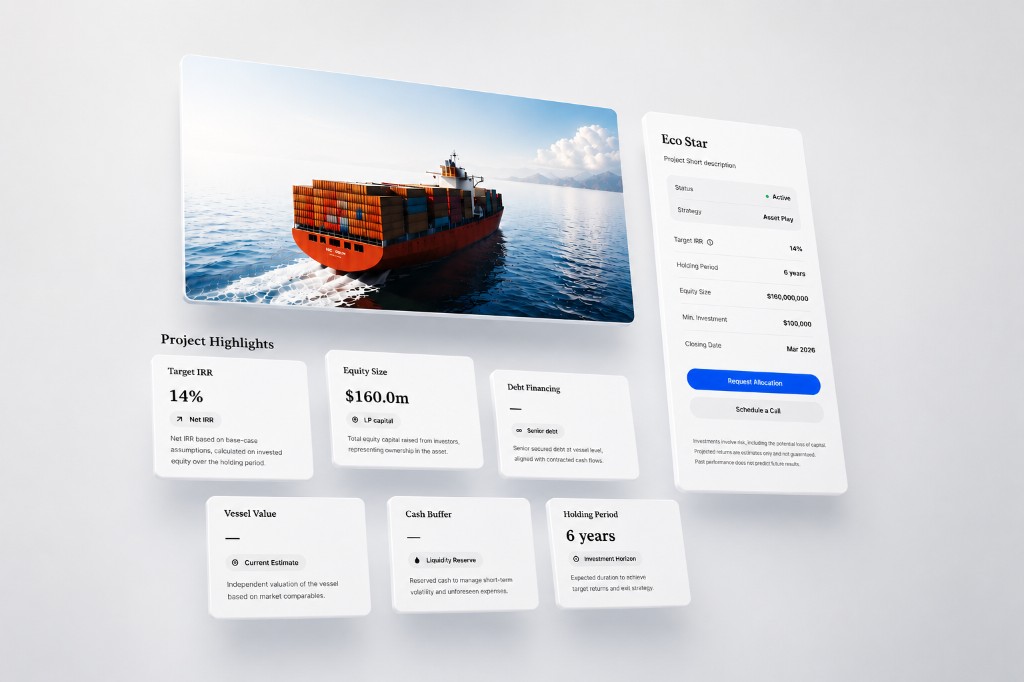
Portfolio
Curated flow of co-investment opportunities and secondary listings.
- Live deals
- Upcoming opportunities
- Information memorandums
- Secondaries access
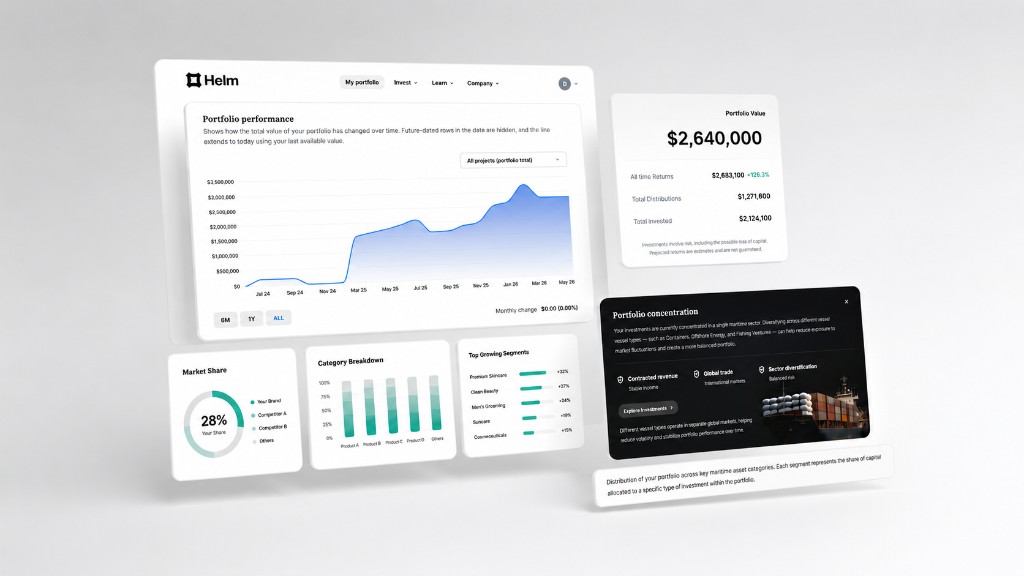
Data Center
Unified workspace for portfolio monitoring and performance reporting.
- Portfolio overview
- Performance tracking
- Investment documents
- Financial reports
Exit Scenarios
Helm supports three return paths: periodic income, asset sale at maturity, or early liquidity where available.
Dividends
Ongoing income generated during the investment period, typically from charter revenues. Distributions depend on forward cash flow needs and market conditions.
Asset Sale
Returns driven by the sale of the asset, with final distributions linked to accumulated profits and vessel value at realization.
Secondaries
An option for early exit via secondary transactions, enabling the transfer of positions to other eligible investors within the community, with pricing and availability dependent on market demand.
Secondaries
Helm provides a marketplace to facilitate the buying and selling of positions in shipping investments, giving investors the potential to access early liquidity within defined terms.

What is it?
The Secondaries provides a mechanism to offer existing positions to other eligible investors, enabling potential liquidity ahead of the asset's maturity.
When is it available?
Availability depends on the investment structure and prevailing market conditions. Transactions are generally enabled during predefined exit windows, typically twice annually and liquidity is not guaranteed.
Who can trade?
Trading is offered to eligible investors within the community, with participation governed by the compliance requirements of each project and subject to additional checks where applicable.
Safeguards
The set of controls, policies, and infrastructure in place to support investor protection and regulatory compliance.

Governance
Projects are curated with a focus on experienced sponsors with track record and structures that uphold strong information undertakings, minority protections, and transparency throughout.

Compliance
Participants eligibility and compliance are supported by thorough KYC processes for investors and sponsors, ensuring all parties are verified and aligned with high quality standards.

Platform and Data Security
Helm is powered by best-in-class services and protocols to protect personal and investment data, ensuring privacy and full end-to-end platform security across all interactions.